How to reduce screen time for Kids

This is an update of a post I wrote 7 years ago for my two boys with ADHD. Screens have exploded since then and have become quite the thing to tame…….
Screens are literally everywhere, and often not even in your control (ie school!) But, there are things you can do to reduce the time your kids spend on screens and increase their real world activities and time for connection.
These rules are for all kids, regardless of how their brain works. Neurodivergent kids do struggle more with screen addiction in general, but I would say it is a struggle with nearly 100% of the kids on a screen.
The screens themselves are engineered to create addiciton, bypass parents, and leave them wanting and sneaking more and more.
Screens Can Harm Our Values as Parents
In his article in Psychology Today, Mike Brooks talks about the harm screen time may be doing to our values as parents and families. As parents in this technological world , our values are not being, well, validated!
We feel the constant push and pull of living a life full of the things that we find to be most important.
It’s getting harder and harder to have a family life that includes: creativity, outdoor fun, lots of in-person interactions, reading for pleasure, boredom, and lazy slow days void of any screens.
So, while it may be hard to keep those values in today’s techno crazy world, keeping them as part of your core family values and instilling them in your kids is 100% the right thing to do.
It’s those values that will help you and your child navigate the world of technology and make choices for your family that promote creativity. learning, and social awareness.

Benefits of Limiting Screen Time
One thing to note, the effect of limiting screen time may not so immediate, as one researcher from Iowa State notes. As with many things, it might get worse before it gets better.
As you begin to limit screens, over time, you’ll begin to see lots of benefits like these:
- Better academic performance – Less time on a screen can mean more time for academic pursuits. Teenagers academic performance went down for each extra hour they spent on a screen. So less time on a screen means better overall school performance.
- Better overall behavior – Getting kids off the dopamine rush of screens and interacting with family and friends can make them less likely to act out in aggressive ways, says this study.
- Better sleep – Many studies sight that the more kids are on a screen, the less sleep they get. This alone can lead to a host of issues. Lessening screen time can allow your kiddo to get more brain boosting, restorative sleep.
- Reduced Eye Strain – Computer Vision Syndrome is a real thing. Looking at a screen closely can have degenerative effects on your vision as well as give you dry eyes and make you feel exhausted.
- Fewer headaches – Kids won’t be spending so much time hunched over a device, easing up on the neck and back muscle strain.
- Increase in prosocial behavior/Decrease in aggression -One Iowa state study found that limiting screen use can have a hue ripple effect, one that can even be seen seven months later. Parents saw an increase in prosocial behavior and a decrease in aggression.
- Weight reduction It serves to reason that spending less time on a screen would put kids at a lower risk for gaining weight.
Ideas for How to Reduce Screen Time
We all know too much is too much….
Just like you wouldn’t want your kid to play the violin all day, you don’t want them on a screen all day either, no matter what they are doing on it.
And remember, you are the parent. If you are not comfortable with the amount of time your kids are on screens, you have to final say.
Finding what works for your kid is key. Which one of these ideas to limit screen time resonates most with you?
1. Limit YOUR Screen Use
Your kids learn how to be responsible screen users from YOU.
The best way to get your kids to do something and to see it’s importance is for you to do it yourself.
Some great examples of screen time rules that the whole family can abide by:
- No phones at the table,
- Phone free Sunday afternoons
- Devices kept at central charging station overnight
- Friday family movie night -great for connecting with a screen
- Devices kept in a central family area for all to see.
- All screens off and away by 7pm(or whatever time is an hour or two before bed)
This can be tricky when you work from home or do lots of work on a computer (like me!) But, the best thing you can do for you and your child is to set boundaries with YOUR screens.
Food for thought: A 2015 survey revealed that kids whose parents looked at their devices during meal and family times, felt less important than those whose parents did not.
2. Conversations over Contracts
I do not believe in contracts for screen time.
In my opinion contracts are just too hard not to break, especially for impulsive kids.
I just think it sets them up for failure.
Working collaboratively with your kids to come up with solutions is the best way to approach screen time limits.
Conversations over contracts.
It’s so helpful to discuss your concerns and get your kids to express their needs when it comes to screen time. (Hello, Ross Greene!)Not that you have to agree to everything they want, but letting them have a say in establishing rules will go a long way.
This will involve lots of ongoing conversations, to be sure.
Tweens and teenagers, will especially have very strong feelings about their screens and will be grateful that you asked!
Make sure you voice your concerns, listen to theirs and come up with a solution that meets everyones needs.
This does not mean that you will not have the final say, at some point. But you may have to make some minor concessions along the way.
3. Find Other Indoor Activities
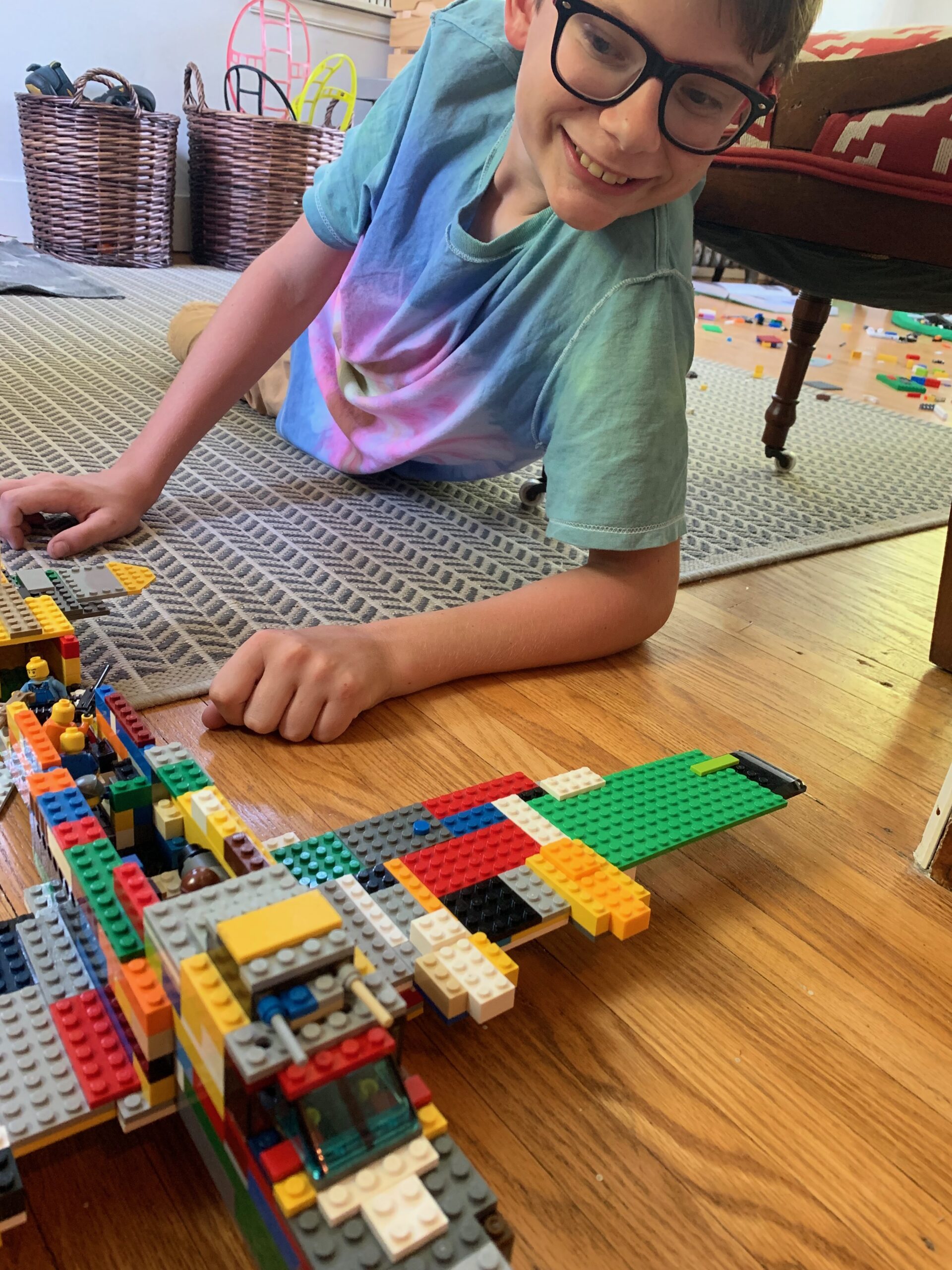
As a self-confessed techno phobe when my kids were younger, I can honestly say that I was super good at finding awesome ways to keep my two boys busy, busy, busy with lots of cool indoor activities.
I wrote an entire post about really great indoor activities for Busy kids HERE. So I am not going to repeat all that great information in this post.
But in a nutshell, the more open ended the toy or activity is, the more likely your kids will be to engage in deep and meaningful play.
I am sure everyone has a moment where you have witnessed your kids playing with a cardboard box for longer than you ever thought possible! The more possibilities a toy has, the more it will bring out your kids’ creativity. Think plain wooden blocks, simple dolls, musical instruments, cars, art supplies, blank journals…….
Related: The Best Indoor Activities for Busy Boys
A fascinating find: Certain screen free activities seem to negate the issues brought about by screens, says one Canadian study(However, do note that the study is based on two hours per day of screens – an amount much lower than the average). Rigorous exercise and good sleep has been shown to significantly lower the negative effects of screens.

4. Avoid using screens as a reward
I am not a big fan of the “Do these things before you get screen time” lists that are all over Pinterest. I do not want to hold screen time up as the ultimate thing that my kid is working towards.
I also don’t want to devalue anything on that list, like exercise and reading as something my kid has to “get through” in order to have screen time.
We have our routine time for screens that stays constant with a few extra opportunities thrown in on rainy days or when families get together.
Screen time is not dependent on getting anything else done(except homework, of couse!) BUT, because we have screen time later in the day, of course my kids have had time to play outside, read a book, take a walk with me, etc.
5. Tell them your “why”
Be clear about why you want to limit screens or change the way your kids use screens.
Talk about your values as a parent and the things you value more than screens. Talk about wanting a more connected family, more outdoor adventures, or a fitter, healthier body.
Talk with kids about the addictive nature of the games the creators built in.
My kids constantly say, “You are really strict about screen time.” and I reply, “Thats because I know what I know.”

6. Make Screen Time a Routine
Routines are so beneficial for kids and teens alike. Setting up screen time to happen at the same time on a daily or weekly basis can stop whining(or worse!) in it’s tracks.
Maybe screens only come out for thirty minutes in the am and thirty minutes in the pm. Or only from 4pm to 6 pm. Maybe you give your child an amount of time that is monitored by an app and their phone only has limited capabilities after they’ve reached their limit.
Screen time routines may differ during the year and we certainly have changed our routine during different ages and stages. We are a bit more lax in the summer, but screen time doesn’t start until 4pm. During the school year there are no screens other than school work during the week and choice screen time only on the weekends.
I guarantee you will have a much easier time limiting screens if you make it part of your routine.
7. Use Parental Controls Sparingly
In my opinion, If you feel the need to put all sorts of controls on your kids phone, then they probably are not mature enough to handle the responsibility of having a device.
Parental controls are not okay if you are using them to constantly “spy” on your child. But they can be helpful if you want to shut off the phone at a certain time or only allow texting or calling to be done on a phone.
We use Screentime and generally have been happy with it. When my kids first got their phone in 8th grade, we set their phones to have two hours of only texting and phone calls, while not being able to access the internet at all. As they have gotten older, we’ve eased up a bit and had to let them learn how to manage things.
But we still have a shut off time at 10 pm on school nights. And when the weather is bad, I do like to check my son’s location to make sure he made it to work safely. : )
Other parenting software to check out:
8. Use a Timer
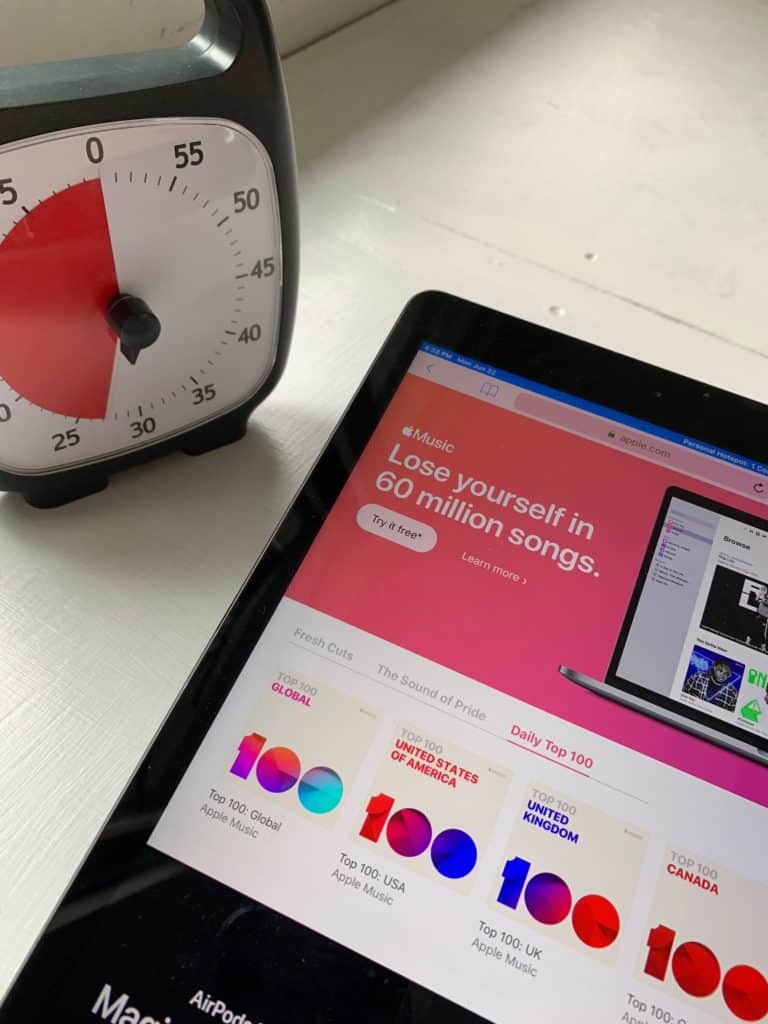
It can be extremely helpful to use a timer like, the Time Timer to set the boundary of time for video games. When the timer goes off they are done.
It’s like the timer is setting the boundary, not you!
Related: The Best Timer for ADHD

9. Prioritize Family Connection
Edward Hallowell, one of my favorite ADHD docs talks about “the other Vitamin C” (Connection) being the best anecdote to ADHD. An amazingly beneficial way to get your kids off screens is to plan fun family activities.
Work with your entire family to create a bucket list of family favorites for whatever season you are in. (Yeah! Summer!) Planning screen free family activities can go a long promote togetherness and connection.
It’s important that everyone has a say in this process and that kids learn to adjust to others preferences – They may not love every suggestion, but it’s important to learn to do things because it makes someone else in the family happy. Even with a tween and a teen, we are still working on this!
Also note, that it might take some work on your part to get everyone out of the house. Grumbly teens may be resistant at first, but will most likely come around as the day unfolds. Ask me how I know…..
Our favorite screen free activities include mini golf, eating at an outdoor cafe, taking hikes at the local nature center, picking mulberries and making jam, spending an afternoon at our favorite second hand bookstore, heading to the beach, getting 10 bucks to spend at the art store, visiting a car show, or traveling to a not so local museum.
It’s often easier if you plan an activity for the whole family – hard to leave one kid behind and easier to enjoy if you are modeling the behavior.