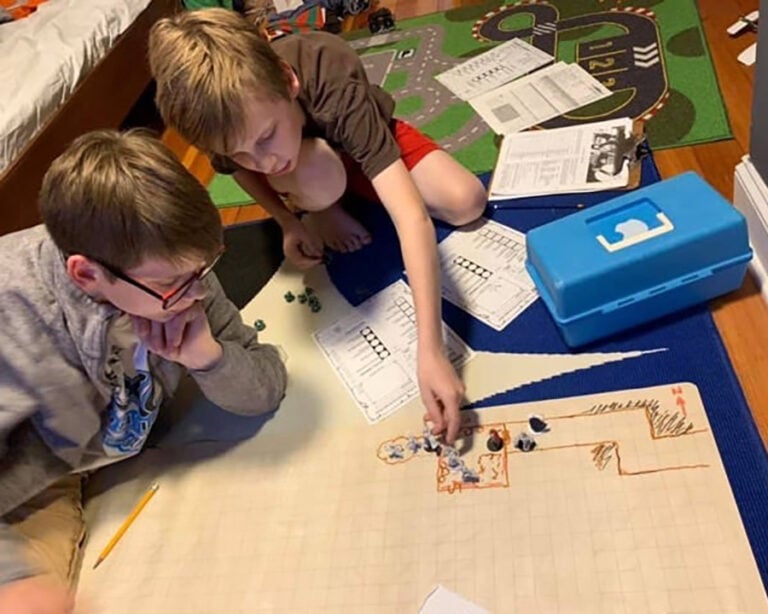
Flash Card Ideas for Math Facts Practice

I talked a bit before about how my kids hate flash cards. Usually, what could have been a quick 10 minute practice session often turned into moans and groans and even tears. It was a bummer. I loved the challenge of flash cards as a kid. But clearly, I had to find another way for my kids to practice their facts.
Instead of turning to an app on the computer, I tried to find other ways to use the flash cards we already had. Flash cards are quick, easy, and readily available. I just could not get rid of them…or give up on ’em. And I am glad I didn’t because now we use them in all sorts of ways. Here are a few, fun ideas for you to try.
Scroll Down for our Free, “Flashcard Hacks” Download
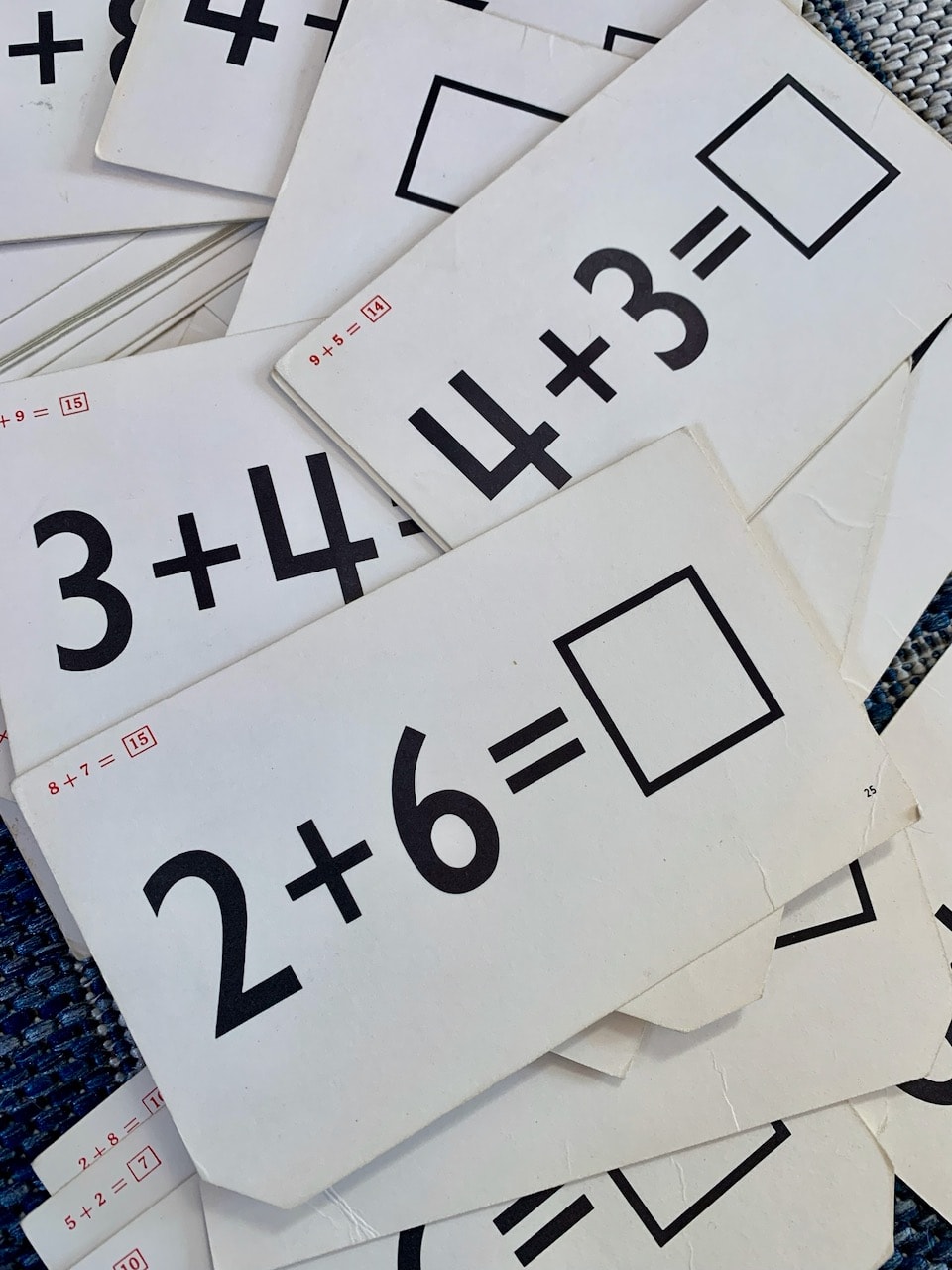
At what age should kids know their facts?
Children as young as toddlers can begin to gain a sense of numbers. Having fun with numbers, learning to see patterns, sorting and counting and comparing are all great foundational skills to work on with smaller kids.
Kindergarten is probably when most kids first encounter mathematical equations and start to learn their facts. Depending upon where your kids go to school, they may or may not have wrote memorization quizzes.
As a teacher, my general rule of thumb is:
- Addition and subtraction facts thru 20 should be “memorized” by mid to end of 3rd grade
- Multiplication/Division facts with factors thru 10 should be “memorized” by the end of 5th grade
Certainly, the expectations for your child may be different, and it just might be that your kiddo, like my own two boys, will need some extra help getting their facts down.
And I truly hope, they don’t have the pressure situation my kiddo had. (If they do, ask to opt out!!)
Ok, Now Onto the Creative ways to Use Flash Cards !
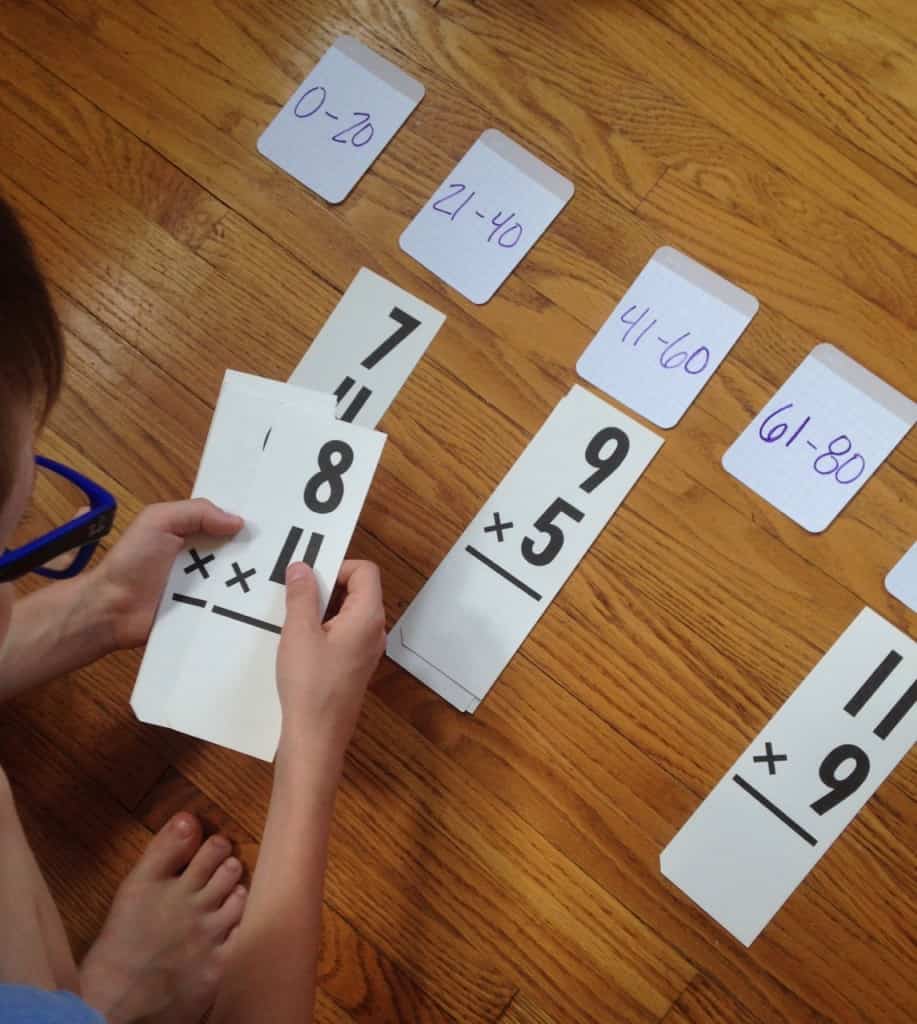
Sort ’em into categories
Having kids sort flashcards into different categories is a great introduction to learning their facts. It takes the pressure off knowing the correct answer immediately and gets them thinking in general terms, first. This activity is great for developing number sense–kids will have to think past the answer and decide into which category the cards must be placed. Beginners can start with 5 to 10 cards to sort. Slowly work your way up to the entire deck of flashcards.
For addition and subtraction flash cards, you may start with the categories of less than 10, 10, and greater than 10. Or single digit sum, double digit sum(these categories also review great vocabulary!) Multiplication categories can have a range of 10 or 20 ( 0 thru 10, 11 thru 20, 21 thru 30, etc) Division categories can be similar to the ones you use for addition.
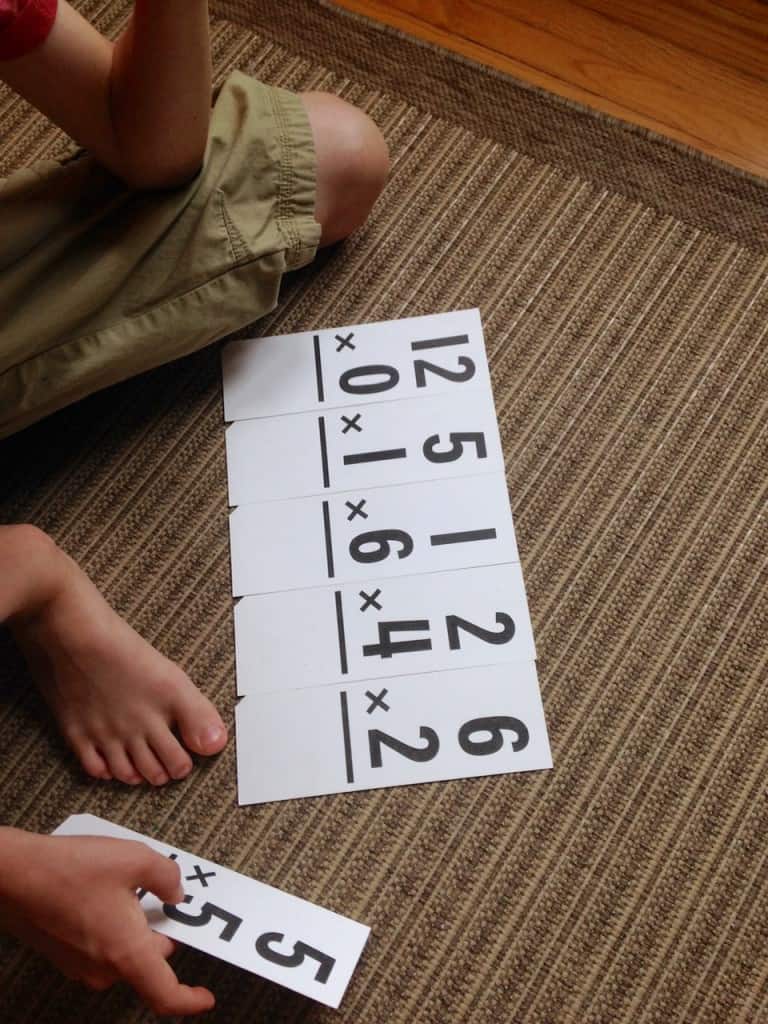
Order ’em from least to greatest
Give your child 3 to 5 flash cards to start. Have them place the cards in order from least to greatest according to their answer. As things get easier, you can keep handing them 1 card and have them place the card in the appropriate spot on their growing number line. This one is great because they are mentally doing each problem every time they have to place a new card. And again, it takes the pressure off knowing each answer right away.
Both of these ideas are great because they be modified to meet your child’s needs. When they have finished sorting or ordering you can look over the cards and talk about them a bit. “Now what is 3 plus 6? Yes, 9. That is why it is in the less than 10 category” “Hmmm. I see 6 plus 5 in the less than 10 category, where should I move it? You do not have to go thru all the piles, but it is good for them to hear your inner math dialogue out loud and hear the vocabulary used, as well.

(Side note, these are my favorite flash cards for durability and simplicity : Addition, Subtraction, Multiplication and Division).
Show Me Whatcha know
This is a good way to assess what your kiddo knows or has learned along this flash card journey. Simply hand them a bunch of flash cards and have them sort them into a pile of answers I know and answers I am still working on.
Give them a quick quiz of the ones they know for extra practice and then have them choose a few more to practice.
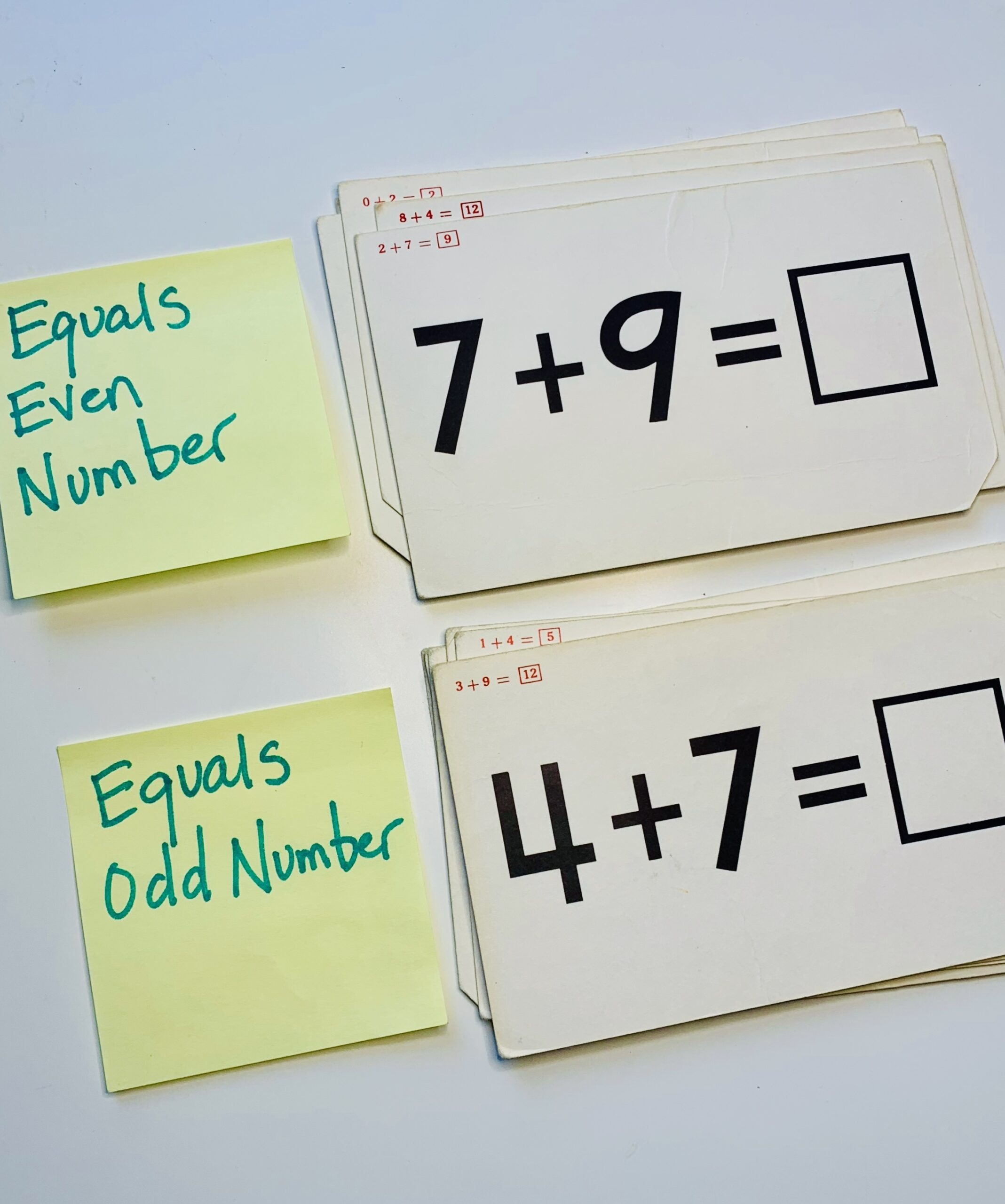
sort flash cards by Even and Odds
This activity works on two skills at once. Make sure your kids remember what “even” and “odd” mean before you start. Use post-it notes to write the two categories and sort the flash cards into even and odd answers.
Compare the flash Cards
Line up from least to greatest. Give your child about 5 to 10 flash cards and they have to lay then in a line from least answer to greatest answer. They can use their number sense to fit in the one’s they don’t know yet.

Give Them the Answer
Have you child match up answers written on post-it notes with the flash cards. Then mix them up and have your kiddo correct the answers for you.
This one is great for kids who have a lot of anxiety. having the answers takes away some of the pressure.
Use movement
Getting kids moving can really help kids who struggle to learn their math facts.
My grandmother used to play 52 card pick up to “keep her figure”. She’d literally dump a deck of cards in front of her and bend down and up, picking up one card at a time. These games are an homage to her.
Spread the Cards
You can spread cards all over the floor (or all over the room, basement, etc.) and give directions, like:
- “Bring me 5 cards the equal 10”
- “Find 10 cards that equal less than 20”
- “Find 5 problems that you know the answer to and 5 you do not”
- “Find all the cards that equal 14, 15 or 16”.
Leap Card
Make a line of flash cards and jump from one to the other saying the answers out loud as you jump. Start with 10 or so cards and keep increasing them. This is a great way to burn off some energy if you are cooped up indoors.
Remember to do these with a light heart and a fun spirit. I suggest that you practice in short sessions (10 minutes or so) and do them several times a week until the facts have been pretty much mastered. Many of these can be done in the car or in quick pockets of time anytime of the day. Modify as you deem necessary to fit your child’s needs.
Download the ebook for free!
I am so excited to be giving away my newest mini ebook: Flashcard Hacks: Creative and Engaging Ways for Kids to Learn Math Facts. I have compiled these ideas and more in the book. They truly have helped us navigate the waters of learning math facts–a trip that can become very pressure filled and stressful for some kids.
Good Luck and let me know how it goes!! 10 minutes a day or even every other day will help build your child’s number sense and knowledge of their math facts. I’d love to hear about any other modifications you make.
[themify_button style=”xlarge blue flat block” link=”http://www.fuzzymama.com/pinterest-email-sign/” target=”http://www.fuzzymama.com/pinterest-email-sign/” color=”09CFED”]Click Here To Download My Free Flash Card Hacks eBook[/themify_button]