food Ingredients to avoid for adhd
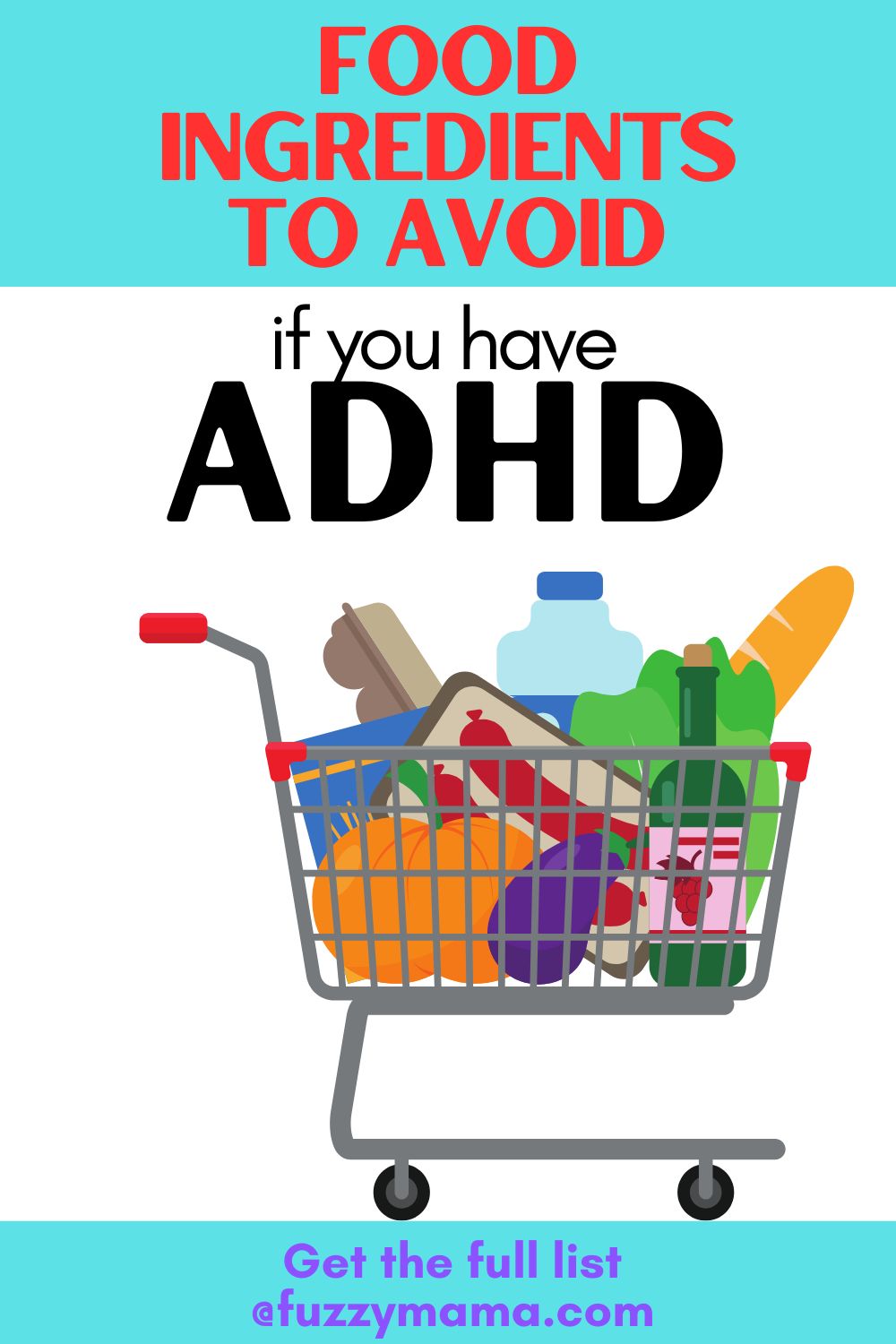
You may be asking yourself, “What food ingredients should I cut out for ADHD?” This will help get you started in the right direction and know what to avoid in your ADHD’ers diet.
We know what our kids put into their mouths can greatly affectly their mood, focus and attention. But what food ingredients are the best to avoid?
What foods to avoid can be different for different kids – BUT, there are some ingredients that seem to affect a lot of kids and are just good, in general, to avoid.
Caveat: I am not a doctor, nor a nutritionist. I share this for informational purposes, so you can do a deeper dive into what you are eating and feeding your kids.
AND, this is not about perfection. This is about arming yourself with information and making better choices over time. It is nearly impossible to avoid these foods 100% of the time. Aim for the 80/20 rule and try to keep these trigger foods making up only 20% of your overall diet.
***Some of the links in this post are affiliate links. See our policy here.***
The Quick Back Story about my ADHD Kiddos
I had a reason to research how food affects ADHD – my oldest son. He was crazy about sugary foods and granola bars and bread, really any processed carb he could get his hands on.
He seems to crave it. All. The. Time.
It could make him extremely emotional, angry, and combative.
In fact, when I started to suspect my oldest had ADHD , food was one of the first things we changed. I saw a change in behavior almost immediately. We now do our best to follow an ADHD Diet , get as much protein as we can and try to be super duper, low on sugar.
While I was learning about sugar and all the reasons to avoid sugar – many other foods cropped up as foods ADHD kids should avoid.
Related: If you are feeding kids with ADHD, these cookbooks will make your life so much easier!!
So, what foods should you avoid for ADHD?
Scroll Down for a Big List of Foods to Avoid That You Can Screenshot and Take to the Store.
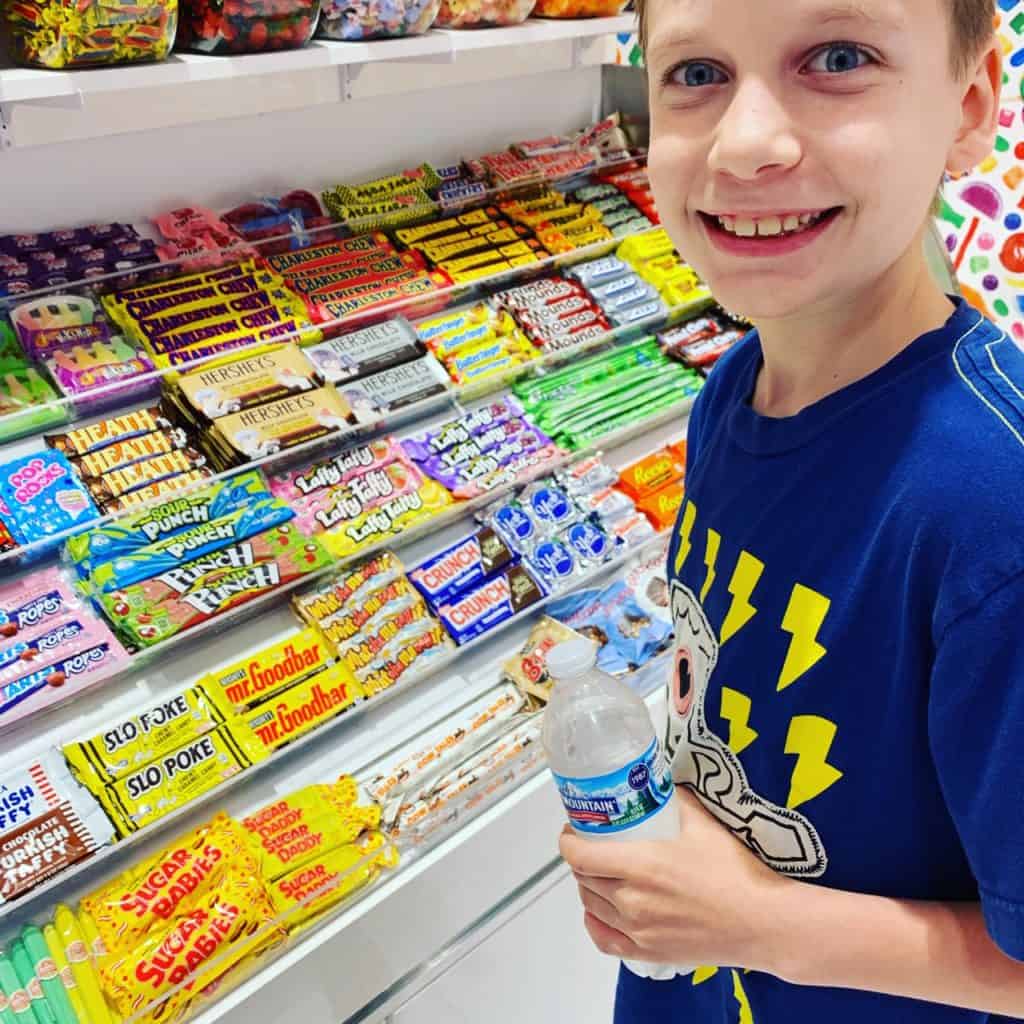
1. Limit Sugar
“Sugar” and ADHD might be worse than you think. These facts, when seen together, really paint a horrible picture for sugar.
- Many studies have shown that sugar increases inattention.
- 1 in 3 adolescents are now considered pre-diabetic as a result of too much sugar consumption.
- Sugar is more addictive than cocaine and causes an addictive response in the brain.
Wait, there’s more bad news about sugar and ADHD:
- Sugar interferes with the actions of calcium and magnesium, increases inflammation, increases erratic brain cell firing, and has been implicated in aggression.
- Studies showed sugar causes increased slow brain waves, and this study from UCLA, showed that sugar alters learning and memory.
- Sugar does not fill you up and encourages you to eat more.
Sugar does damage to the liver , building up fatty tissue, leading to liver disease. Also, when you are eating sugary foods, you are less likely to be getting the nutrients your brain needs to function, increasing your ADHD symptoms.
Sugar can also wreck havoc on our dopamine levels, as our brains become used to high levels of sugar. ADHD kids (and adults) have lower levels of dopamine, and so sugar can be especially addictive for them. In fact, dopamine receptors can be altered in certain areas of the brain from consuming too much sugar over a long period of time.
The effect sugar has on dopamine and dopamine receptors makes it addictive and is why it is often so difficult to eliminate sugar from the diet.

2. Avoid High Fructose Corn Syrup
Most of the sweetener we consume, as Americans, is High Fructose Corn Syrup – not pure cane sugar. Startlingly, the average American consumes about 100 pounds of HFCS annually – that’s 12,000 teaspoons.
I’ve always known it was bad, but the research is mounting daily confirming that it’s one of the foods to avoid for ADHD (and even if you don’t).
High Fructose Corn Syrup is not Sugar
High Fructose Corn Syrup and Sugar are not the same thing.
However, many manufacturers know that people are avoiding foods with High Fructose Corn Syrup on the label and so they are calling HFCS by another name.
Check labels and avoid foods that contain:
- – Maize syrup
- – Glucose syrup
- – Glucose/fructose syrup
- – Tapioca syrup
- – Dahlia syrup
- – Fruit fructose
- – Crystalline fructose
Even foods that have “No High Fructose Corn Syrup” on their labels will have one or more of the above ingredients!
Don’t be deceived by the new names- it’s the same thing!!
25 grams of processed sugar a day is the allowance.
This was a BIG realization for me when I learned this.
Just look on any label and see how fast this adds up. A bowl of cereal and a glass of juice will catapult you over 25 grams-and that is just breakfast!
Our family is no way near the 1/2 pound a day norm, but we often exceed 25 grams of processed sugar per day recommendation for kids.
Remember we are talking about processed sugar…so that includes juices and dried fruit- as well as the obvious candy, frozen pizza, tomato sauce, cakes, cereals, granola bars, ketchup, salad dressings, barbecue chips, and cookies.
Fructose from whole fruits and vegetables is not counted in that limit, as whole foods contain fiber, enzymes, and vitamins and minerals that effect how the body processes the sugar.
What forms of sugar are “okay”?
Fresh and frozen fruit are the best, followed by maple syrup and raw honey, which contain antioxidants and gut beneficial ingredients. Stevia is a low calorie, plant based sweetener that can be okay in small amounts.
Cane sugar is far better than HFCS or any artificial sweetener, but is highly caloric and should be eaten in very small amounts.
The best solution is to cut back – maybe way, way back – on sweet foods in general.
Take a look at what your kids eat in any given day and see how close you are to 25 grams a day. It is not hard at all to come in at double that – even while eating a seemingly, healthy diet

2. Also, stay away from artificial dyes.
Unfortunately, there is more to worry about in these sugary foods than sugar. Artificial food dyes are used to make candy look fun and inviting and exciting! Yet, they are another one of the foods to avoid for adhd.
Luckily, there is a lot of press lately about the ill effects of dyes and things are starting to move in the right direction. But, we still need to read labels, as it may take years for big companies to make the needed changes to their ingredients.
For instance, if your ADHD Kiddo experiences a burst of hyperactivity after eating a food, it may be from Red Dye 40, an artificial coloring found in even brown, green, and white foods. Blue 1, it seems, crosses the blood brain barrier, entering the bloodstream and possibly the brain.
And it’s not just hyperactivity we have to worry about. Food Dyes can also increase inflammation and disrupt the functioning of the immune system, contain toxic cancer causing elements and may cause growth of cancerous tumors.
The FDA requires companies to list artificial food dyes on their labels, so avoiding them is easy. Look for dyes with numbers, like Red 40, Yellow 5, and Blue 1.

3. ADHD’ers should avoid preservatives in their food.
The Feingold Diet for ADHD eliminates three main artificial preservatives – butylated hydroxyanisole (BHA), butylated hydroxytoluene (BHT), and tert-Butrylhdryquinone (TBHQ).
These preservatives are found in foods that need to last a long time – snack foods, gum, butter, meats, baked goods, to name a few. Avoiding processed foods is the best thing to do to avoid preservatives.
These preservatives can cause serious health hazards such as hypersensitivity, allergy, asthma, hyperactivity, neurological damage and cancer.
The Feingold Association has a list of approved foods you can find HERE.
4. Avoid typical allergens like gluten, dairy, soy, and corn.
Foods that are common allergens, like gluten and dairy, can cause inflammation in the body and have an adverse effect on executive function skills. ADHD’ers already struggle with executive function skills like short term memory and gluten may compound it.
There are some interesting links to ADHD and allergies. Some researchers think that 70 to 80% of ADDers have a gluten insensitivity .Both food allergies and ADHD have many things in common like lowered neurotransmitters and the two are often co-morbid.
So, it makes total sense that cutting out allergens very well might help the symptoms of ADHD.
Ideas to Avoid These Ingredients for an ADHD Diet
(An Update for a teenager is below! Keep Reading!)
Ideas to keep sweet treats way down for your kids as you follow an ADHD Diet:
- Read labels and avoid anything that has High Fructose Corn Syrup – or one if it’s new forms.
- Say,”No, thank you.” to all treats we are offered at the bank, the hair salon, the grocery store, etc.
- Drink water, carbonated water, and unsweetened almond milk-period at home.
- Limit “desserts” to one or two days a week.
- Limit processed foods to one packaged item per day, in their school lunch. We have a big list of ADHD approved snacks here.
- Make your own “treats” as often as possible, like cowboy cookies, or walnut date bars using dates, almond or coconut flour and as little sweetener as possible. (These cookbooks are my favorite for finding healthy treats.)
- Talk about how food makes you feel and notice how you feel after eating not so healthy choices.
- Try to get a dopamine rush from exercise. Make exercise a daily habit to help stay away from sugar.
BUT, perfectionism is not the goal. just keep making changes to do better.
The Big List of Foods to Avoid for ADHD
Pin for later!!

Wait, how does this work with teenagers????
*******Update: I now have a teenager!******************
My 15 year old, who struggles to fit in socially as it is, begs me to have a lunch that looks like everyone else’s.
I feel his pain and I continue to make it an opportunity to talk to him.
We have conversations with my son where I talk about the benefits of our adhd diet and the negative effects of too much sugar. He barely listens and really doesn’t believe me.
But I do it anyway and it’s slowly sinking in.
There are lots of situations where sugary sweets are present and I am not – and he overindulges just about every time. He comes home feeling sick and we talk about why his stomach aches, his usually less than stellar behavior, and what to do the next time.
He’s had a few instances where he is beginning to see the correlation between his behavior and how he is feeling and what he eats.
Start the conversation and keep it going…and going.
I know it will take time. There are so many ridiculous places where sweets are offered-school parties and functions, boy scout meetings, track practice, band competitions, houses of friends and family, holidays, and birthday parties.
We really do have the power to change the world-one sucker at a time!!
Please share this article if you know of a mom who would benefit from this information and take a screen shot of the list below to take to the grocery store.